




INDOOR AIR QUALITY
General info
- År: 2026
- Category: Impact on behaviour and indoor air quality
- Animals: Nilgai (Boselaphus tragocamelus)
- Indoor area: Two connected rooms, approx. 18 m² and 22.5 m²
- Total layer thickness: Biobed, minimum 10 cm settled depth
- Measured: NH3, HCHO, TVOC, PM2.5, PM10, plus moisture and pH of the bedding
Why switch to Biobed?
The stable had persistently elevated levels of gases, dust and particles. Ammonia forms when microorganisms break down urea from urine and faeces; airborne particles came largely from the wood shavings themselves. Both affect the respiratory health of the animals and the working environment for the keepers.
METHOD
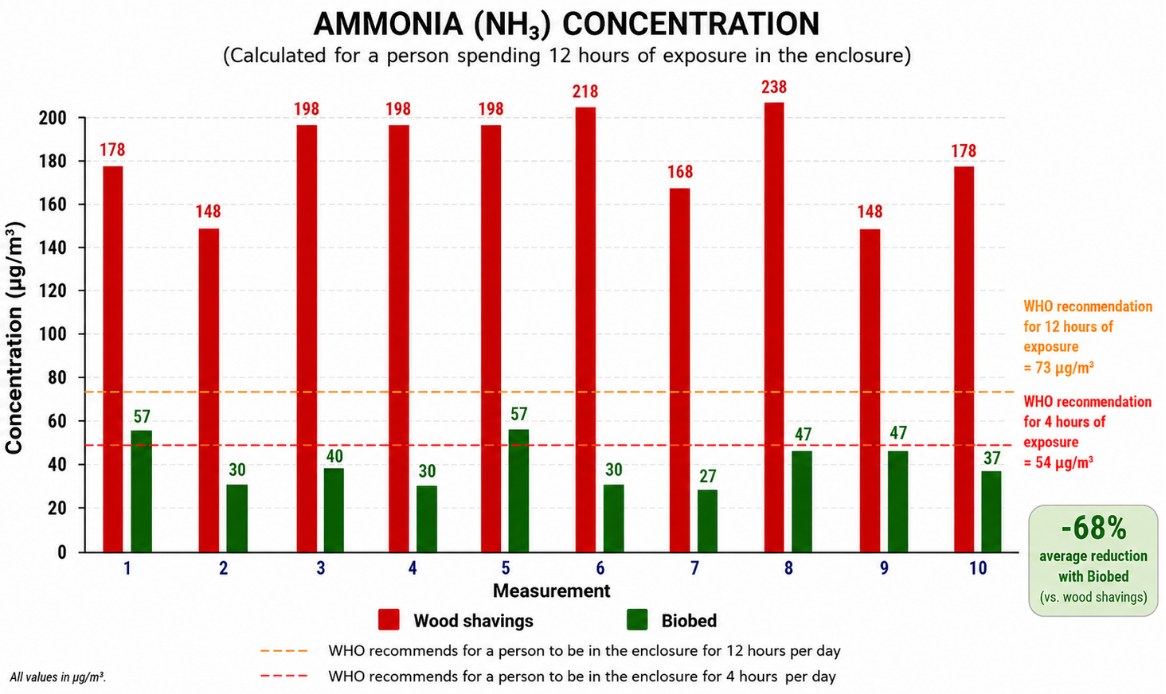
Air quality was measured with an air quality monitor (PM2.5, PM10, TVOC, HCHO) and a Gastec pump with detector tubes for ammonia. Because ammonia is lighter than air and rises, it was measured at two heights – floor level and head height. Measurements were taken ten times before and ten times after the conversion.
AMMONIA (NH3)
At floor level the average concentration fell from 19 ppm to 6 ppm – a reduction of 68%. At head height it fell from 22 ppm to 7 ppm, a reduction of the same magnitude. The improvement therefore covers the whole stable area the animals occupy.
The measurements also showed ammonia beginning to rise from the 8th–10th measurement, when watering had been stretched to every four days rather than every two or three. Regular watering has a direct effect on ammonia levels.
AIRBORNE PARTICLES (PM2.5 AND PM10)
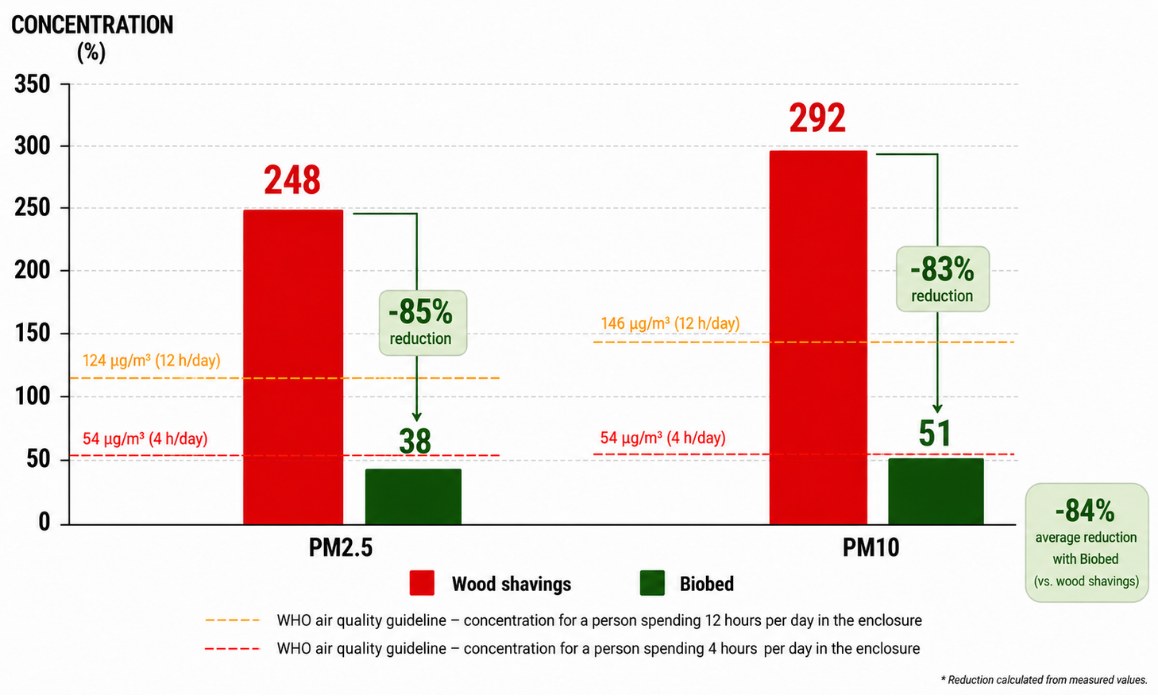
PM2.5 fell from 247 µg/m³ to 37 µg/m³ – a reduction of 85%. PM10 fell from 293 µg/m³ to 53 µg/m³ – a reduction of 82%.
PM2.5 particles penetrate deep into the lungs; PM10 mainly affects the upper respiratory tract. Both remain above the strictest annual guideline values, but the reduction is substantial, and the removal of wood shavings is assessed as the main reason.
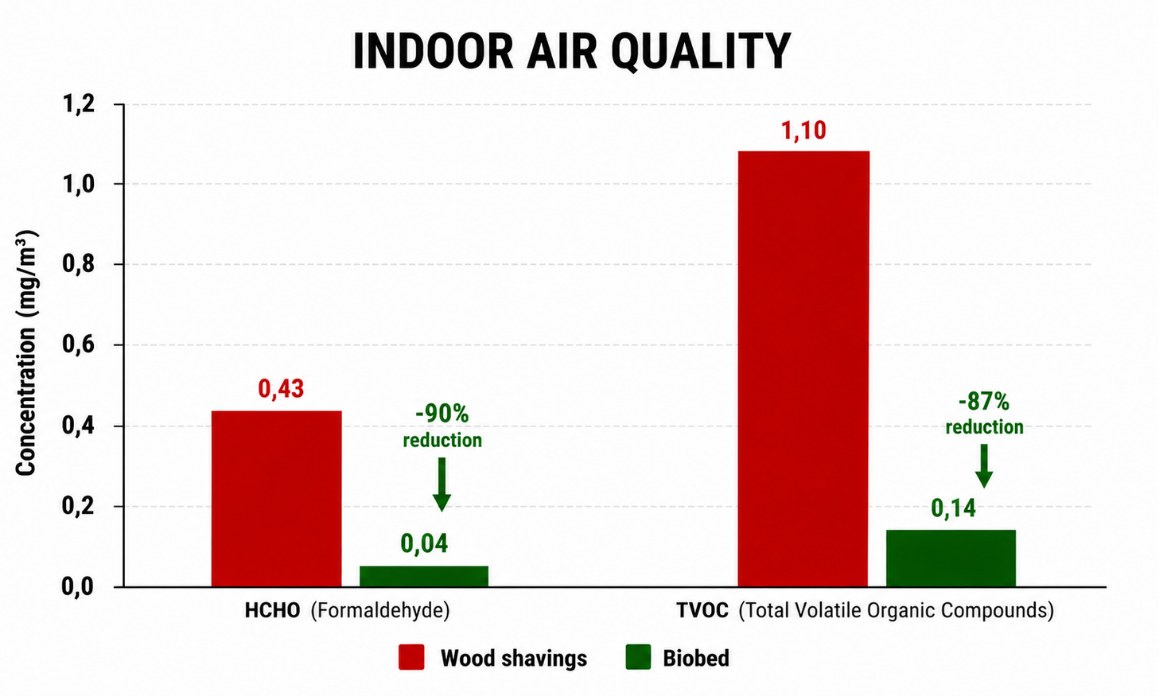
FORMALDEHYDE AND VOLATILE COMPOUNDS (HCHO AND TVOC)
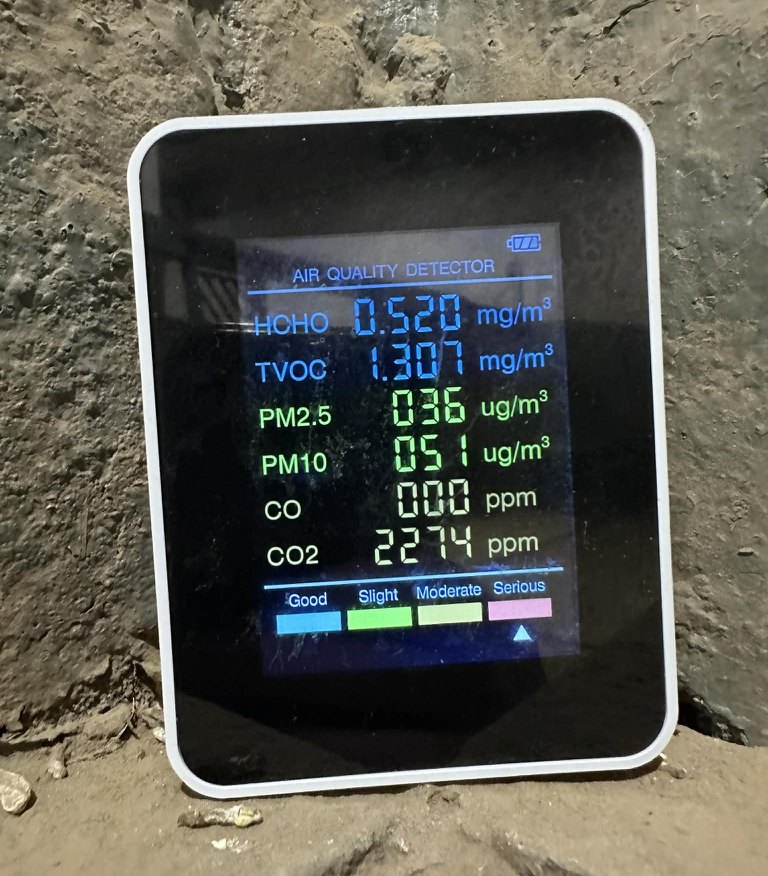
HCHO fell from 0.435 mg/m³ to 0.041 mg/m³ – a reduction of 90% – bringing it below the 8-hour occupational limit value of 0.37 mg/m³. TVOC fell from 1.112 mg/m³ to 0.138 mg/m³ – a reduction of 88%.
HCHO is measured separately because it is particularly harmful and is classified as potentially carcinogenic with long-term exposure.
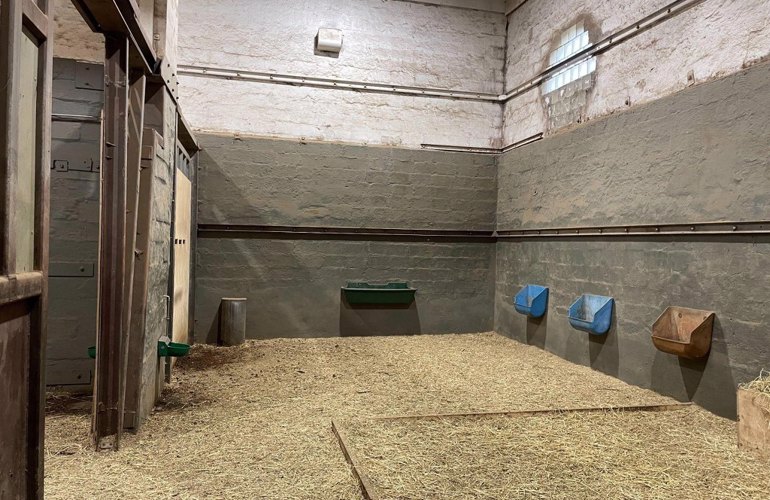
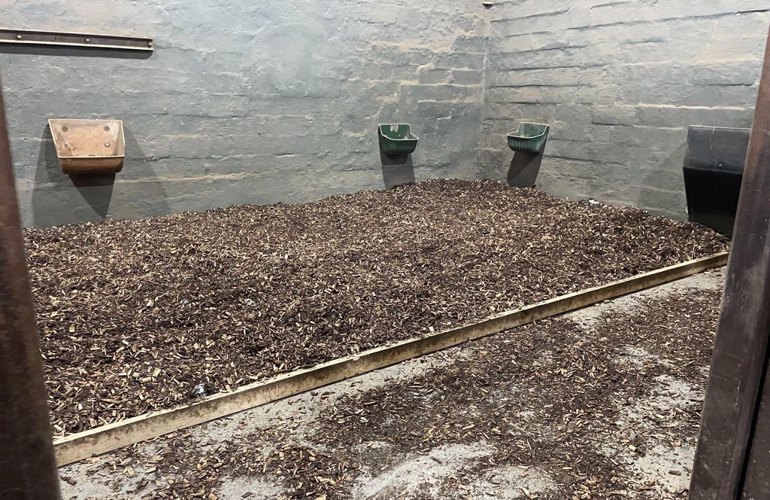
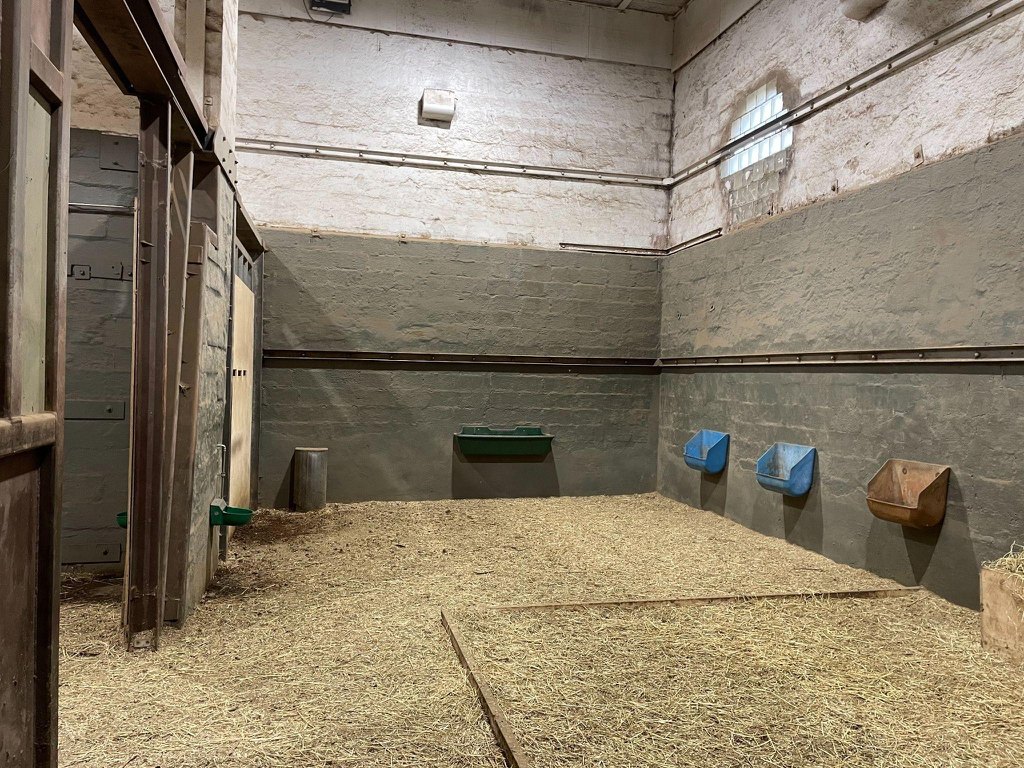
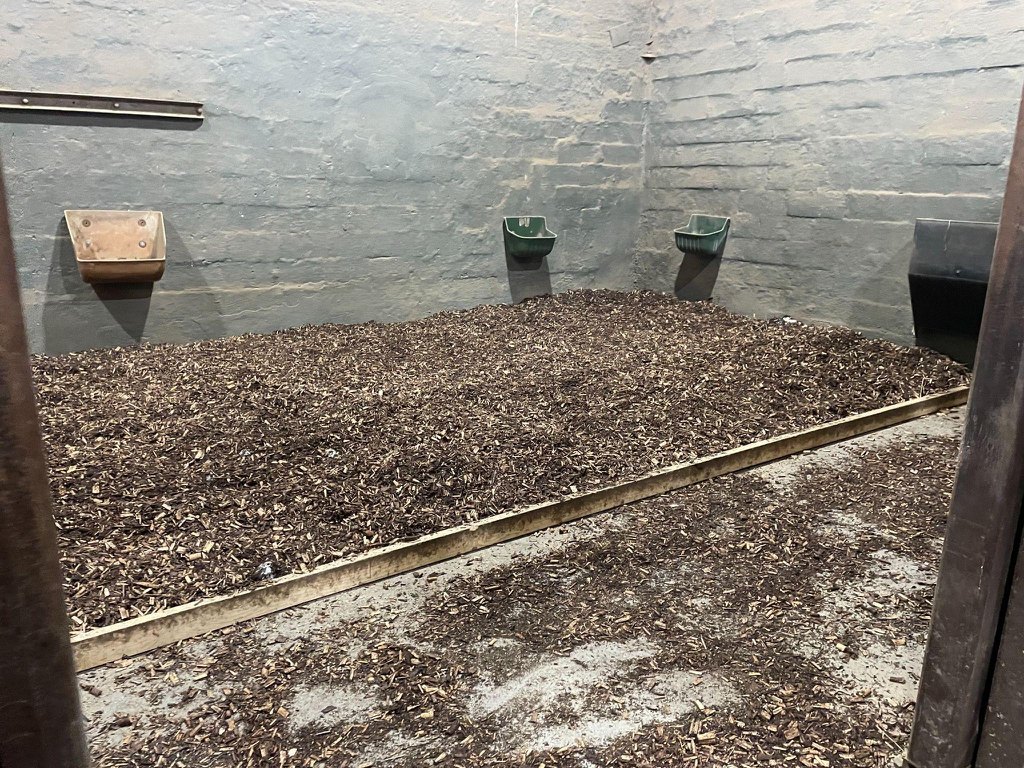
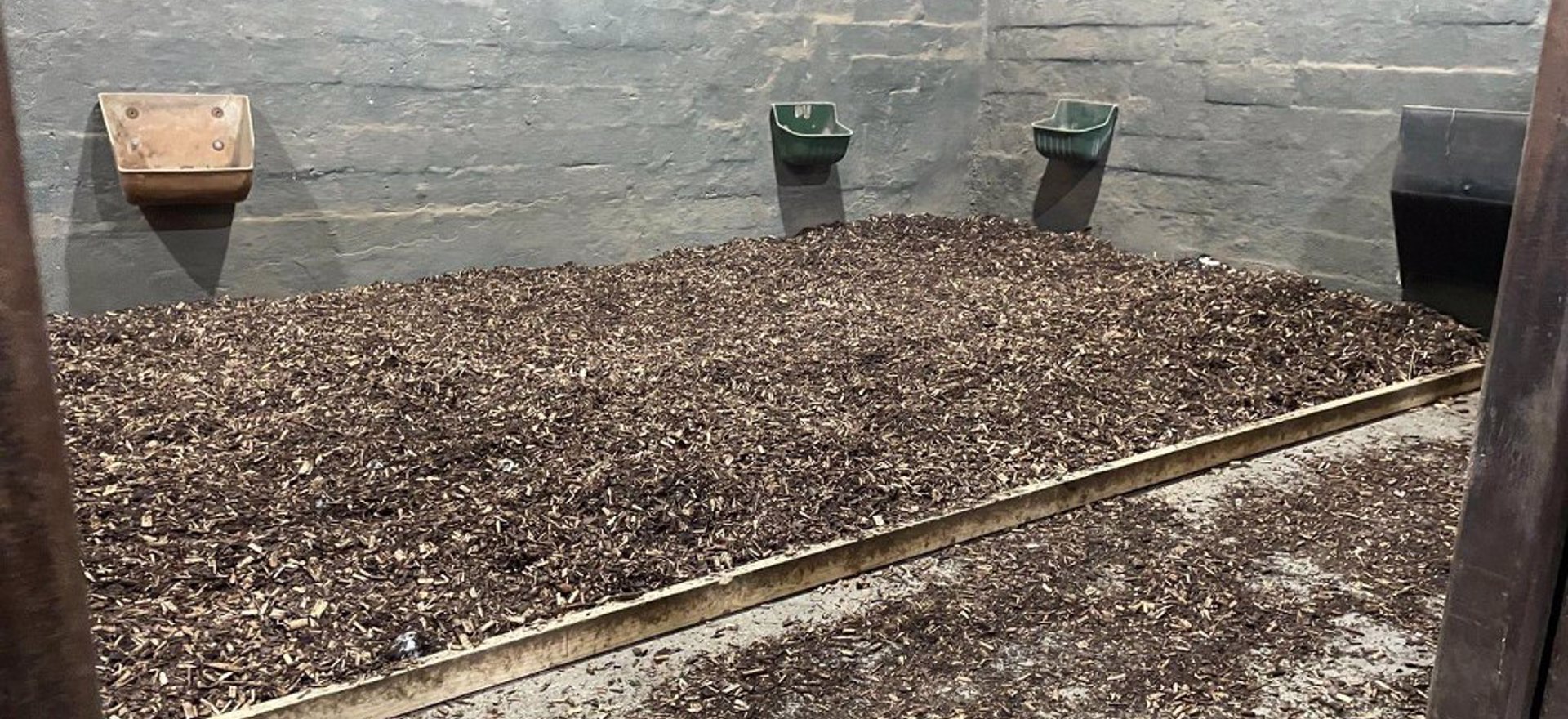
Left: the nilgai stable with wood shavings, before the conversion. Right: the same stable after conversion to Biobed.
KEEPING THE BEDDING WORKING
Moisture and pH were sampled at three watering intervals. Watering every third day gave the best balance – a moisture reading of approximately 8.5 and a pH of about 7.5, close to neutral, which is where the microorganisms work best. Watering every fourth day dried the substrate to around 6.7 and pushed pH up towards 7.9.
Daily working time in the stable rose from 16.6 to 21.3 minutes – an increase of just under five minutes, almost entirely due to watering.
ADVANTAGES OF THE SWITCH
- Ammonia reduced by 68% throughout the stable
- Airborne particles reduced by 82–85%
- Formaldehyde reduced by 90%, below the 8-hour limit value
- Volatile organic compounds reduced by 88%
- A healthier working environment for the zookeepers
- Under five minutes of extra daily maintenance
Contact for more information
Morten Jørgensen, Ny Vraa
M: 45553872
E: msj@nyvraa.dk