




IMPACT ON BEHAVIOUR
General info
- År: 2026
- Category: Impact on behaviour and indoor air quality
- Animals: Nilgai (Boselaphus tragocamelus) – adults and calves
- Indoor area: Two connected rooms, approx. 18 m² and 22.5 m²
- Total layer thickness: Biobed, minimum 10 cm settled depth
- Observation period: 46 days across four months, scan sampling every 15 minutes, 14:30–07:30
Why switch to Biobed?
The nilgai stable at Givskud ZOO – Zootopia had persistently elevated levels of gases, dust and particles, which the animals were exposed to every day. Wood shavings were assessed as the main source of the dusty indoor environment. Based on experience from other zoological institutions and from Givskud ZOO’s own primate facility, Biobed was selected as the alternative to test.
Method
Behaviour was recorded with surveillance cameras using scan sampling – one recording every 15 minutes – over 46 days spread across four months. Observations ran from 14:30 to 07:30 to minimise human influence and to match the nilgai’s natural activity pattern of foraging in the morning and evening and resting in the middle of the day.
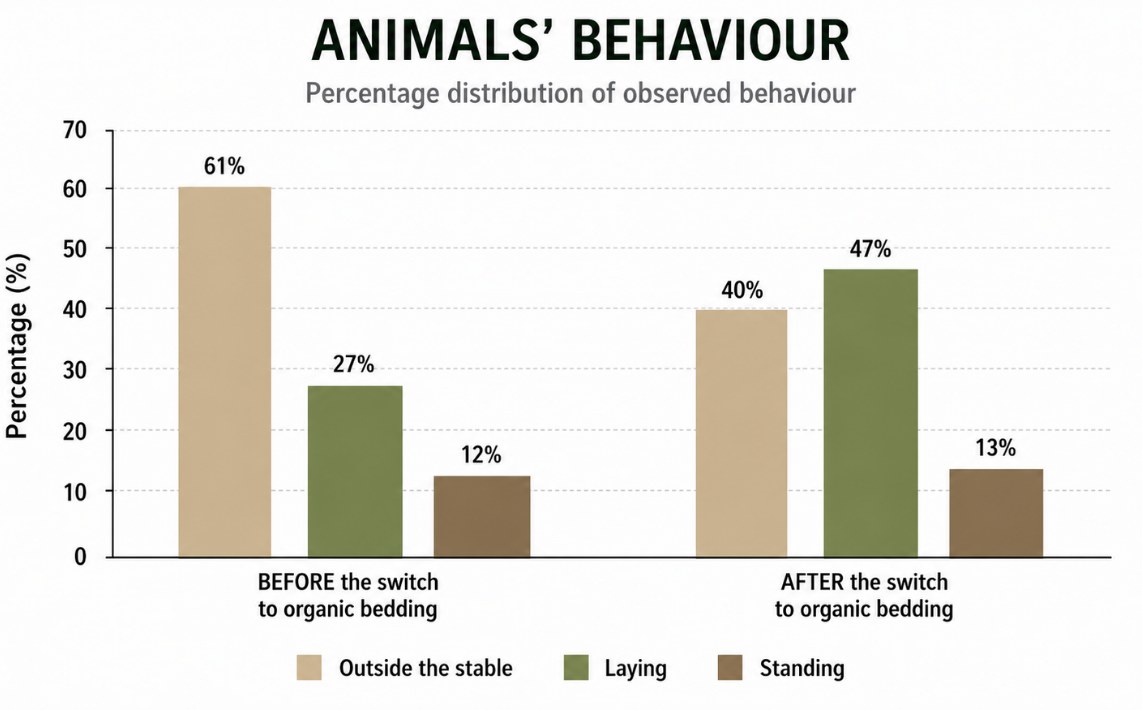
Three behavioural states were scored: lying in the stable, standing in the stable, and staying outside the stable.
RESULTS
Calves. Time spent lying down in the stable rose from 27% to 47%. Standing was essentially unchanged, from 12% to 13%. Time spent outside the stable fell from 61% to 40%.
Adults. The same trend. Lying behaviour rose from 24% to 47%, standing fell slightly from 14% to 13%, and time outside the stable fell from 62% to 40%.
Notably, the difference in behaviour between calves and adults narrowed after the conversion – both age groups settled at the same 47% lying behaviour.
DISTRIBUTION IN THE STABLE
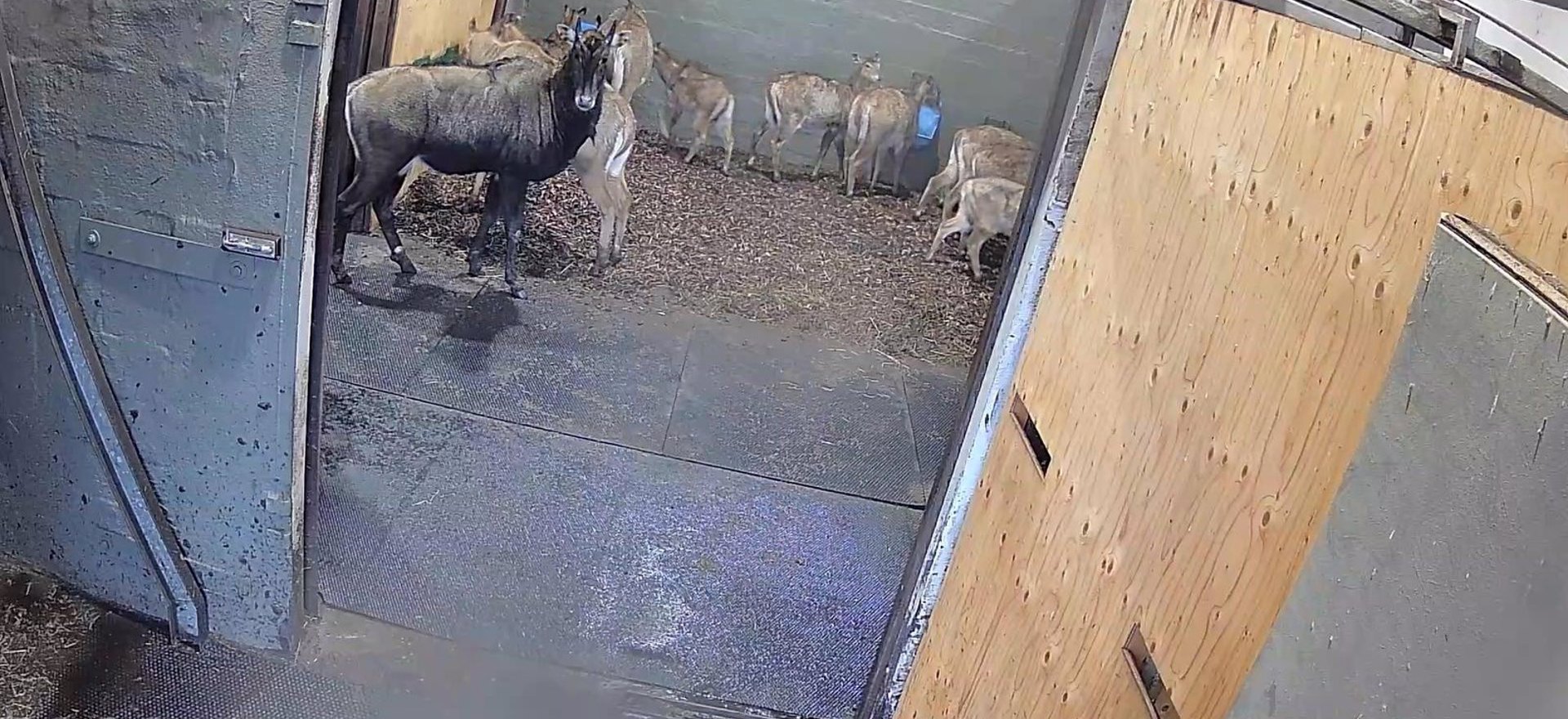
Camera footage showed a second change. Before the conversion the animals concentrated in the centre of the stable. Afterwards they distributed themselves evenly across the whole floor area.
Increased resting behaviour and a more even distribution are generally read as signs of comfort and security, which suggests the Biobed had a positive effect on how the nilgai used their indoor enclosure.
ADVANTAGES OF THE SWITCH
- More time spent resting indoors, across all age groups
- The whole indoor area used, rather than a few preferred spots
- The behavioural gap between calves and adults narrowed
- A softer, yielding surface that reduces pressure on joints and hooves
Contact for more information
Morten Jørgensen, Ny Vraa
M: 45553872
E: msj@nyvraa.dk